
sā Ladakh Biennale: Where Contemporary Art Meets the Living Heritage of the Himalayas

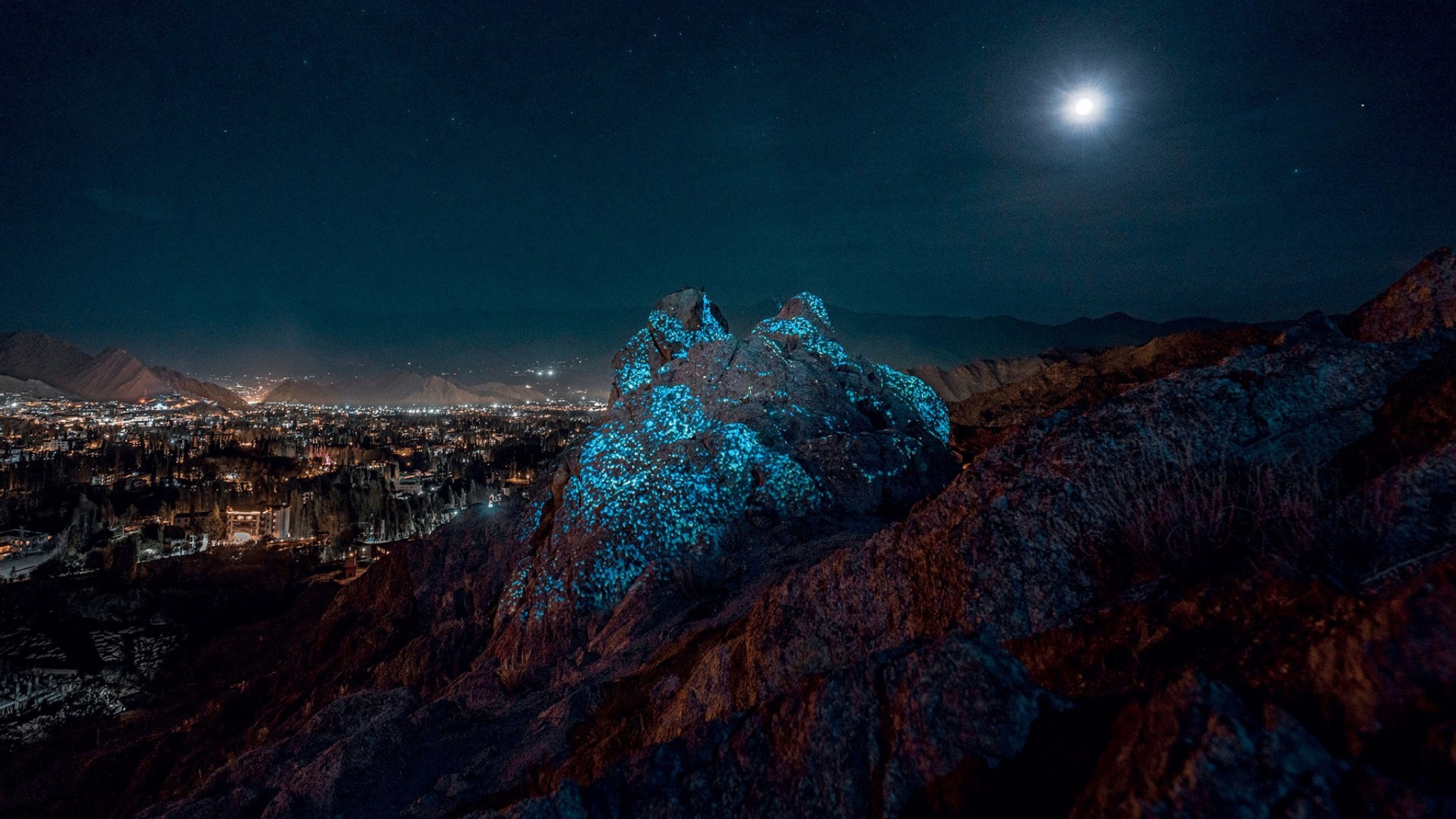
Discover Ladakh through a journey of art, culture, ancient landscapes, and meaningful travel.
“Not every gallery has walls. Some stretch across mountain valleys, ancient monasteries, and villages where culture has quietly endured for centuries.”
There are destinations that invite you to admire them from a distance, and there are those that ask something more of you. Ladakh belongs firmly to the latter.
Perched high in the Indian Himalayas, this extraordinary region has long captivated travellers with its stark beauty—ochre mountains sculpted by wind, emerald rivers carving through ancient valleys, whitewashed monasteries balancing impossibly on rocky outcrops, and communities whose traditions remain deeply connected to the land they call home.
For decades, visitors have come in search of adventure, spirituality, or simply the silence found only at altitude. Yet today, another reason is drawing culturally curious travellers to this remarkable corner of India.
The sā Ladakh Biennale.
Unlike any traditional art festival, the sā Ladakh Biennale transforms Ladakh itself into a living gallery, inviting visitors to experience contemporary art not inside exhibition halls, but across villages, heritage sites, monasteries, and dramatic Himalayan landscapes. Here, the journey between artworks becomes just as meaningful as the installations themselves.
For travellers, it offers something increasingly rare: the opportunity to discover a destination through the conversations it inspires rather than simply the attractions it presents.
Where the Landscape Becomes the Gallery
Most biennales are defined by a venue.
The sā Ladakh Biennale is defined by a landscape.
Rather than gathering artists inside a single museum, the Biennale unfolds across a network of locations stretching from Leh towards Kargil, with installations appearing in places such as Basgo, Likir, Nurla, Lamayuru, Heniskot, Mulbekh, and Hunderman. Each location has been carefully chosen not merely as a backdrop, but as an active participant in the dialogue between art, nature, history, and community.
The exhibition explores themes that resonate deeply with Ladakh itself: climate change, regeneration, indigenous knowledge, cultural resilience, and humanity’s evolving relationship with fragile mountain ecosystems.
Visitors don’t simply view artworks—they travel through landscapes where those conversations are already part of everyday life.
An installation beside a centuries-old monastery carries different meaning when local monks still gather there each morning. A sculpture standing among apricot orchards speaks differently when farmers continue tending the land as their ancestors did generations before. Every road travelled between exhibitions becomes another chapter in understanding Ladakh itself.
Following the Biennale: A Journey Through Ladakh
One of the greatest pleasures of the sā Ladakh Biennale lies in its invitation to slow down.
Rather than rushing between exhibition spaces, travellers naturally follow the rhythm of the mountains, allowing each destination to reveal its own story. It is a journey that rewards curiosity and invites deeper connections—not only with contemporary art, but with the communities, landscapes, and heritage that continue to shape Ladakh today.
Leh: Where Tradition Meets Contemporary Creativity
Every journey begins in Leh, the historic capital of Ladakh.
Spend your first days acclimatising while wandering through the old town, visiting Leh Palace, browsing artisan workshops, and discovering the Biennale’s first installations woven into the city’s cultural fabric.
Leh has always been a crossroads. Once an important trading hub along the Silk Route, today it continues to connect ideas, cultures, and people from across the Himalayas. It is the perfect introduction to the Biennale’s vision of bringing contemporary creativity into dialogue with centuries of living tradition.
For those seeking a stay that reflects this same philosophy, Dolkhar Ladakh offers an inspiring base. Built using traditional Ladakhi construction techniques and locally sourced materials, its contemporary architecture honours the region’s heritage while embracing thoughtful modern design. After a day exploring exhibitions and bustling markets, its peaceful gardens and mountain views offer a welcome place to pause and reflect.

Stok: Understanding Ladakh’s Royal Legacy
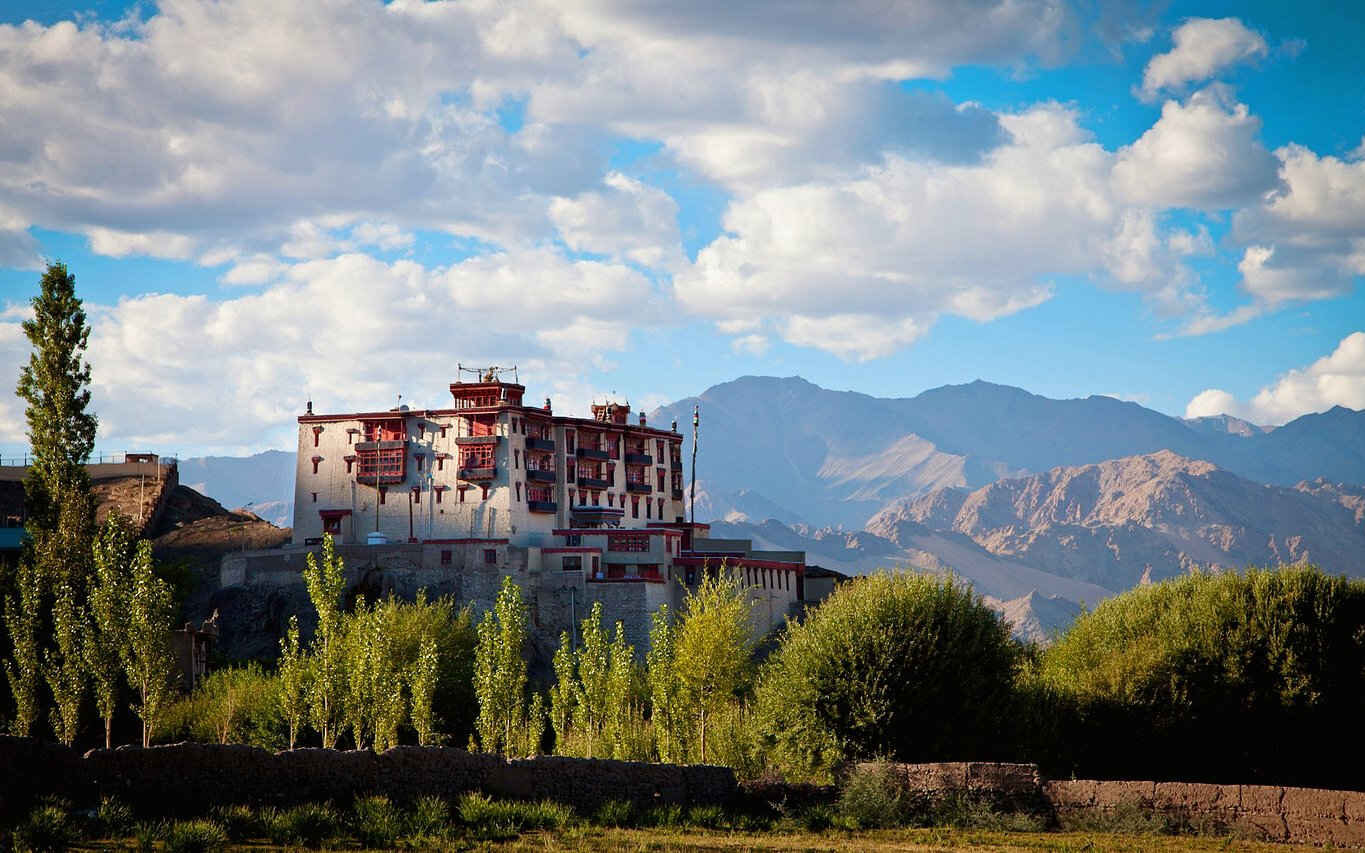
Just across the Indus River lies Stok Palace, the ancestral home of Ladakh’s royal family.
While the Biennale encourages visitors to imagine Ladakh’s future, Stok invites them to understand its past.
The beautifully preserved palace remains a living residence, where royal heritage continues alongside everyday life. Inside, visitors discover centuries-old artefacts, ceremonial costumes, and stories that illuminate the cultural foundations upon which contemporary Ladakh continues to evolve.
Experiencing both the Biennale and Stok Palace creates an intriguing dialogue between innovation and tradition—one exploring new artistic expressions, the other safeguarding a remarkable historical legacy.
It is a reminder that culture is never static. It is continuously shaped by those who inherit it, reinterpret it, and pass it on.
Following the Indus Valley to Nimmu
Leaving Leh, the road begins tracing the course of the mighty Indus River.
This is perhaps where the spirit of the Biennale becomes most tangible.
Ancient monasteries emerge from the mountainsides. Villages appear unexpectedly among ribbons of green fields. Fortresses stand as silent witnesses to centuries of Himalayan history.
Travellers passing through Basgo, Likir, Alchi, and Lamayuru are no longer simply driving between destinations—they are moving through the very landscapes that have inspired artists participating in the Biennale.
Nestled within the peaceful village of Nimmu, Nimmu House provides an ideal place to slow the journey.
Here, Ladakh reveals a quieter rhythm. Orchard gardens replace busy streets. Family hospitality replaces hotel formality. Conversations unfold over home-cooked meals while the surrounding landscape encourages visitors to reconnect with nature at a gentler pace.
From Nimmu, the Biennale becomes less about individual artworks and more about the remarkable cultural landscape that connects them all.

Beyond the Biennale: Into Nubra Valley
Although the official Biennale route concludes further west, the conversations it begins continue far beyond the exhibition itself.
Crossing the legendary Khardung La Pass, one of the world’s highest motorable roads, travellers enter the breathtaking Nubra Valley—a landscape once traversed by traders journeying between Central Asia, Tibet, and the Indian subcontinent.
Here, towering mountains give way to sand dunes, fertile villages, double-humped Bactrian camels, and a culture shaped by centuries of exchange along the ancient Silk Route.
Nestled within Kyagar Village, Lchang Nang Retreat feels like a natural continuation of the Biennale’s philosophy.
Built using traditional Ladakhi architecture and designed with sustainability at its heart, the retreat embodies many of the values explored throughout the exhibition: respect for local knowledge, harmony with the environment, and meaningful engagement with community.
Whether joining a village walk, enjoying locally inspired cuisine, or simply watching the changing light across the surrounding mountains, travellers discover that the dialogue between people and landscape continues long after the final artwork has been seen.

Why the sā Ladakh Biennale Matters
The world’s most memorable journeys rarely revolve around a single attraction.
Instead, they invite us to see familiar places through unfamiliar perspectives.
The sā Ladakh Biennale does precisely that.
Rather than asking visitors to consume culture, it encourages them to participate in it. It transforms roads into galleries, villages into classrooms, monasteries into places of reflection, and conversations into lasting memories.
For Ladakh, where environmental challenges and cultural preservation have become increasingly intertwined, the Biennale offers a powerful reminder that art can do more than inspire—it can connect communities, encourage dialogue, and deepen our understanding of the landscapes we travel through.
Staying with the Story
One of the most rewarding ways to experience the sā Ladakh Biennale is not to rush through it.
Allow time to wander beyond the exhibition map. Stay in places where Ladakhi hospitality remains deeply personal. Share meals prepared with local ingredients. Wake to the sound of monastery bells instead of traffic. Listen to the stories carried by the people who have called these mountains home for generations.
Together, Dolkhar, Stok Palace, Nimmu House, and Lchang Nang Retreat create more than a collection of remarkable places to stay. They offer four distinct windows into Ladakh itself—its evolving creativity, royal heritage, village life, and enduring connection to the natural world.
Because ultimately, the sā Ladakh Biennale is not simply about contemporary art.
It is about discovering that the greatest masterpiece may well be Ladakh itself.
