

Once, across parts of Asia, a bright white smile was not the ideal.
Beauty was darker—deliberate, deepened over time, and quietly refined.
To modern eyes, blackened teeth can feel unfamiliar, even unsettling. But for centuries, from Japan to mainland Southeast Asia, this was not an exception. It was elegance, maturity, and belonging—marked directly onto the body.
When Black Meant Beautiful
The practice of tooth darkening—known in different regions through different methods—was once widespread across Asia.
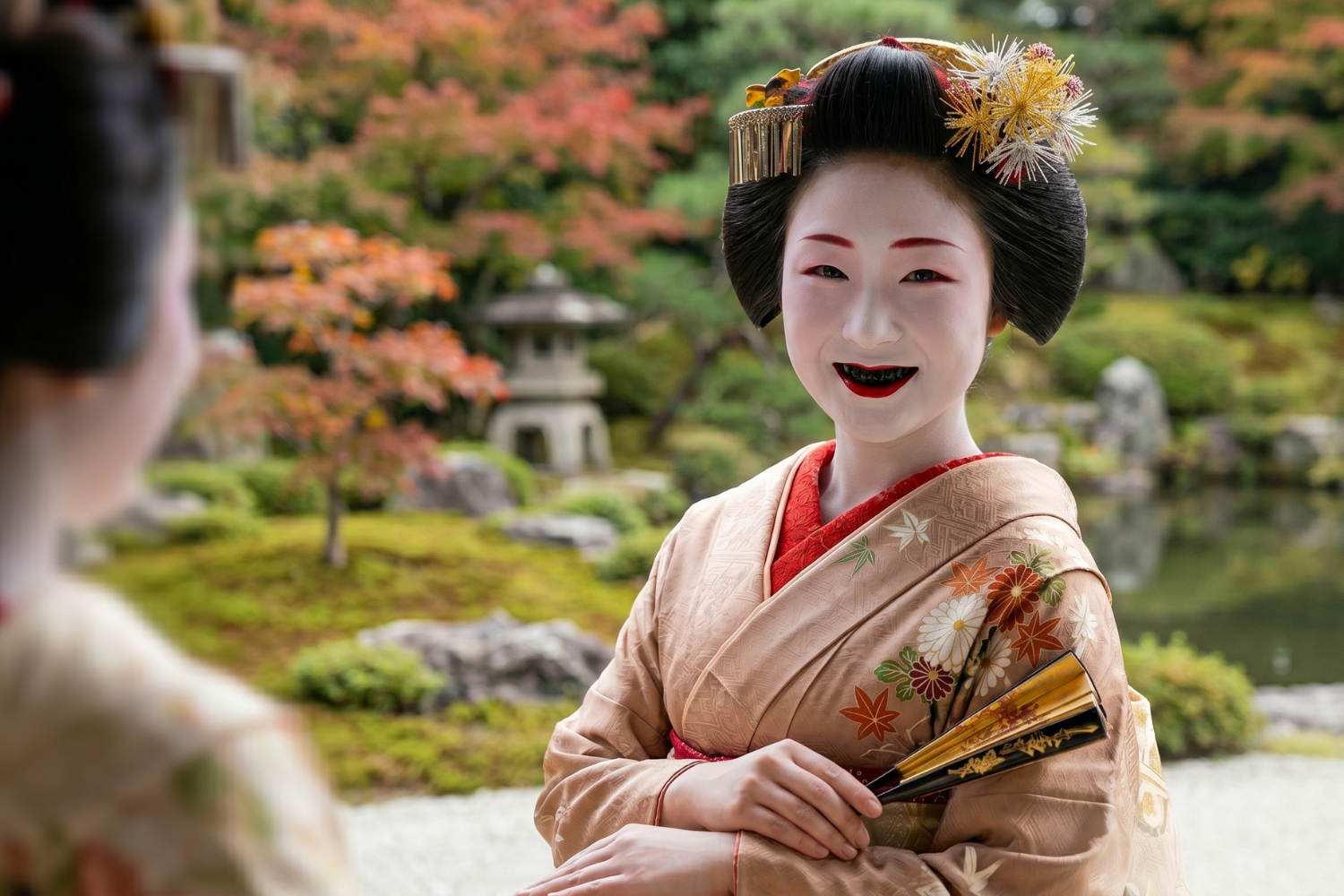
In Japan, it was called ohaguro. Among aristocrats, and later married women, teeth were dyed a deep, lacquered black. The process was intentional and precise, creating a smooth, polished finish that contrasted strikingly with white powdered skin and carefully painted lips.
In Vietnam, blackened teeth carried their own quiet authority. A darkened smile was associated with beauty, refinement, and social maturity. It marked the transition into adulthood, distinguishing the cultivated from the unformed.
Across Thailand and neighboring regions—Laos, Myanmar, Cambodia—the result could appear similar, but the path to it was different.
Not lacquered, but lived.
A Transformation Over Time
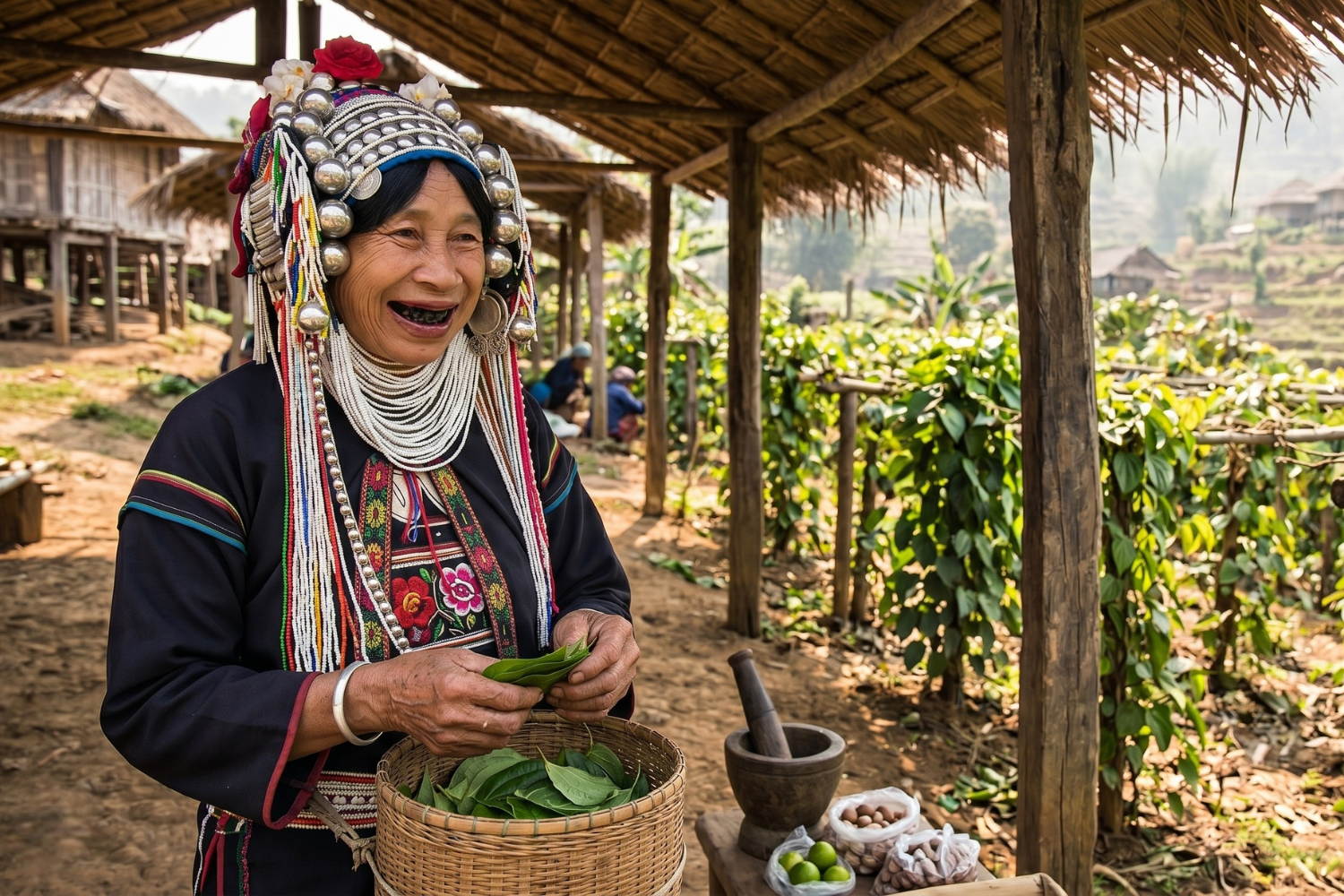
In much of Southeast Asia, the darkening of teeth emerged gradually through the chewing of betel quid—a mixture of areca nut, betel leaf, and slaked lime.
It was a daily habit, but also more than that.
Betel chewing marked:
- Social exchange
- Hospitality and conversation
- Adulthood and participation in community life
Over time, the practice stained the teeth in tones of red, brown, and eventually deepened toward black. The transformation was slow, cumulative—absorbed rather than applied.
Where ohaguro in Japan was deliberate and uniform, the tones shaped by betel were softer, irregular, and evolving.
Less about precision, more about passage.
Beauty, Status, and Protection
To understand this tradition is to step briefly outside modern assumptions of beauty.
Across these cultures, darkened teeth could signify:
- Maturity
- Marriage
- Cultural belonging
- A refined aesthetic
White teeth, in contrast, were not always ideal. In some contexts, they were associated with youth or something unfinished—lacking the depth that came with age and experience.
There were also practical dimensions.
In Japan, the ohaguro mixture—often made from iron filings and tannins—formed a protective coating over the teeth. In Southeast Asia, the ingredients of betel chewing contributed, in certain contexts, to oral preservation.
What appeared ornamental was, at times, quietly functional.
The Ritual and the Everyday
In Japan, the act of blackening the teeth was a ritual—carefully prepared, repeatedly maintained. It marked specific stages of life and reflected a highly structured aesthetic.
In Southeast Asia, the rhythm was different.
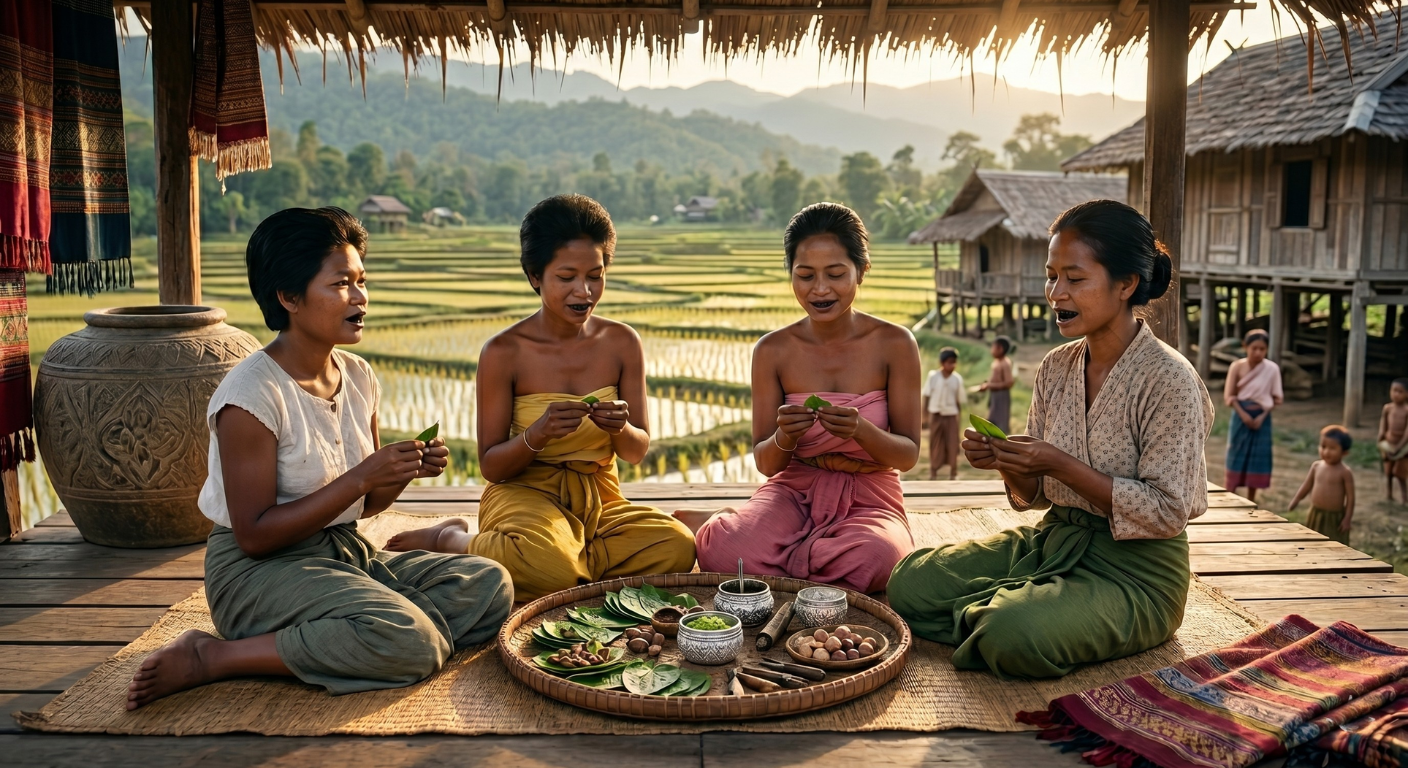
A betel tray, arranged with care, might sit at the center of a gathering. The act of chewing was shared, unhurried, woven into conversation and daily life. The darkening of teeth was not a single moment of transformation, but the result of years.
Two approaches—one precise, one gradual—arriving at a similar visual language.
A Beauty That Faded
By the late 19th and early 20th centuries, these practices began to recede.
In Japan, ohaguro declined during the Meiji period, as Western aesthetics and modern ideals took hold. White teeth became the new standard—aligned with ideas of cleanliness, progress, and global modernity.
Across Southeast Asia, including Thailand and Vietnam, similar shifts unfolded. Betel chewing became less common, particularly among younger generations, and with it, the gradual darkening of teeth disappeared from everyday life.
What had once been a marker of beauty became, within a few generations, something unfamiliar.
What Remains
Today, blackened teeth are rarely seen outside of:
- Cultural preservation contexts
- Historical reenactments
- Remote communities where traditions continue quietly
But traces remain.
In archival photographs, in oral histories, in the memory of gestures once common—offering betel, preparing mixtures, maintaining a practice that shaped not only appearance, but rhythm.
Rethinking Beauty
To encounter this tradition now is not to adopt it, nor to judge it—but to understand it.
It asks something simple, and enduring:
What do we consider beautiful, and why?
In another time, across much of Asia, the answer was darker—considered, intentional, and deeply embedded in daily life.
These are not just aesthetic choices.
They are ways of aligning the body with the values of a culture.
And like many things across Asia, they are subtle, deliberate, and easily overlooked—until we choose to look again.
