

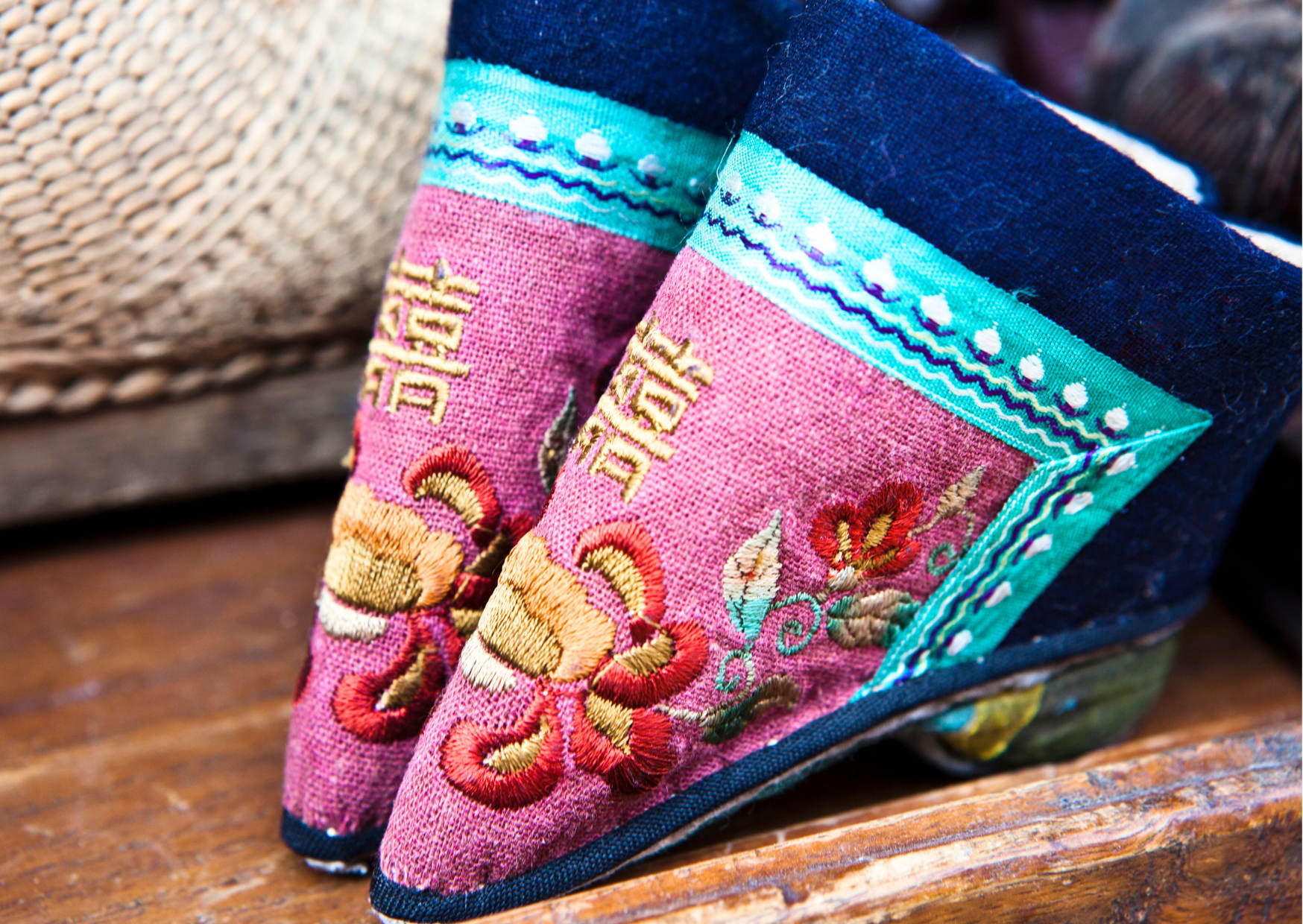
The Beauty Standard That Fascinates and Disturbs
Imagine a beauty ideal so powerful that it shaped the lives of women for nearly a thousand years.
Imagine a standard so admired that families believed it could secure wealth, status, and a better marriage. Yet imagine, too, a practice that many people today find shocking, even unimaginable.
Welcome to the story of China’s lotus feet.
For travellers seeking to understand Asia beyond its landscapes, temples, and cuisines, few cultural traditions reveal as much about the changing nature of society as foot binding. It is a story of beauty and status, power and tradition, and ultimately, of a society that transformed itself.
The Lotus Foot
The practice of foot binding is believed to have emerged among the imperial courts of China around the 10th century before gradually spreading throughout much of the country.
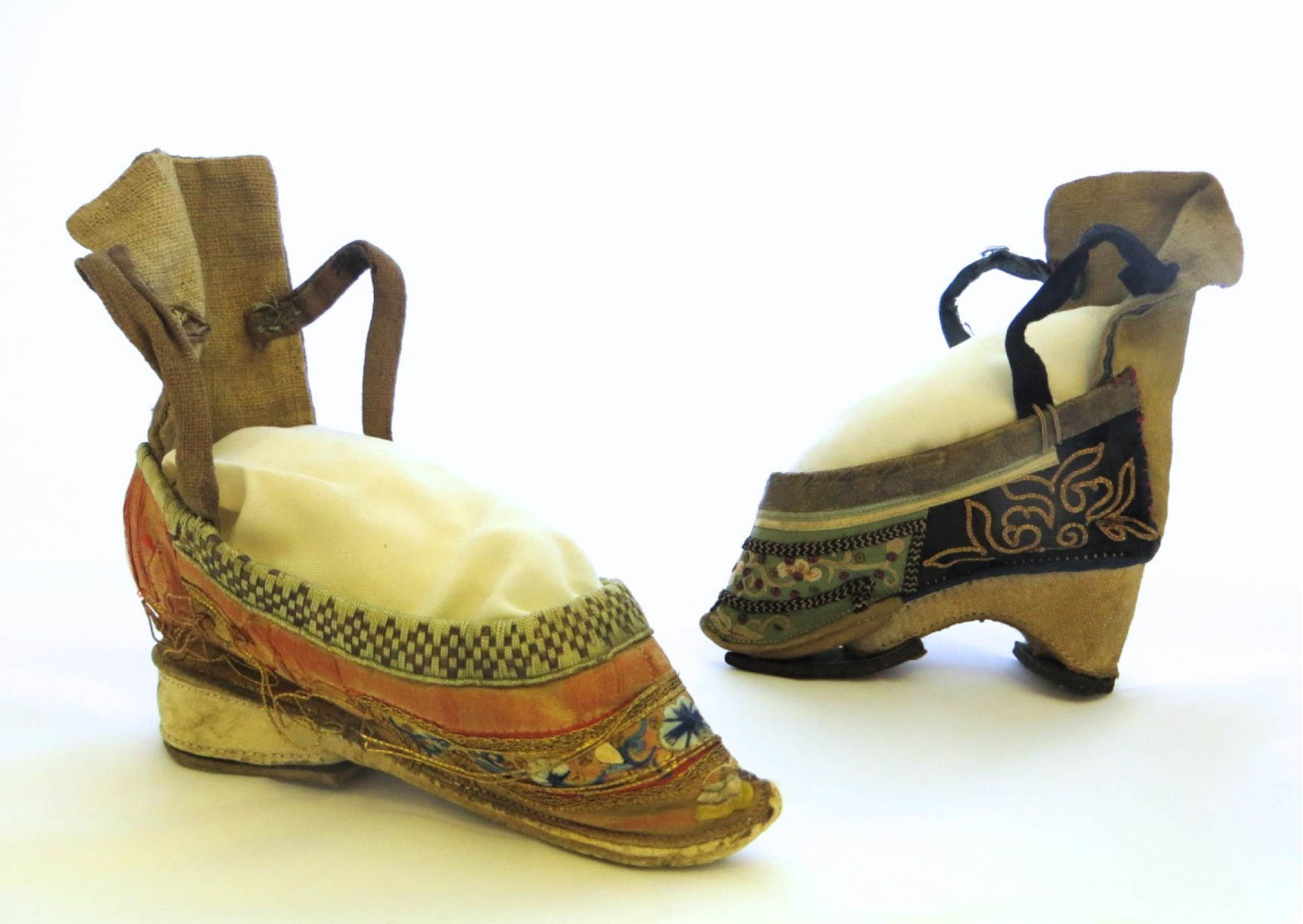
Young girls, often between the ages of four and eight, would have their feet tightly wrapped to prevent normal growth. Over time, the feet became dramatically smaller and arched. The resulting feet were known as lotus feet, a poetic term inspired by the lotus flower, long associated in Chinese culture with elegance, refinement, and beauty.
The most desirable feet measured around three inches in length and were celebrated as golden lotuses. Larger feet might be referred to as silver lotuses or even iron lotuses. Such distinctions reveal just how deeply this beauty ideal became embedded in society.
To modern eyes, the contrast is striking. The lotus flower symbolises grace and purity, yet the reality behind lotus feet was often painful. And still, for centuries, they represented the height of feminine beauty.
A Beauty Standard Unlike Any Other
Few historical customs provoke such mixed reactions.
Many people encounter the story of lotus feet with a sense of fascination. Others react with disbelief or outrage. Most experience both at once.
How could something so restrictive become desirable?
The answer lies in understanding that beauty standards are rarely just about beauty.
For generations, lotus feet communicated social status, discipline, and family prestige. Small feet suggested that a woman came from a household prosperous enough that she would not need to undertake hard physical labour. The smaller the feet, the more admired the achievement.
In many regions of China, a daughter’s marriage prospects could be closely linked to the size of her feet. Families viewed foot binding not merely as an aesthetic choice but as an investment in social mobility and economic security.
Looking back, it is easy to judge. Yet the story also reminds us that every society creates ideals that shape behaviour. What one generation views as desirable, another may find incomprehensible.
But How Did They Walk?
One question inevitably arises whenever travellers learn about lotus feet.
How did women walk?
Contrary to popular belief, women with bound feet did walk. However, their movement was limited to short, careful steps, creating what became known as the “lotus gait.” The swaying motion was often considered graceful and attractive.
Among the wealthy elite, mobility was often less important. Noblewomen frequently travelled in sedan chairs carried by attendants and spent much of their lives within domestic compounds. In such circles, limited mobility was not seen as a disadvantage but rather as evidence of privilege and status.
For women in less affluent households, however, life could be considerably more demanding. Many still worked, managed households, and carried out daily responsibilities despite the challenges imposed by bound feet.
The reality was far more complex than many people imagine.
The End of a Thousand-Year Tradition
By the late nineteenth century, China was changing rapidly.
Reformers, intellectuals, and women’s advocates increasingly questioned long-standing traditions. As China confronted foreign powers and sought to modernise, foot binding came to be viewed by many as a symbol of the country’s need for reform.
Anti-foot-binding societies emerged across the country. Families pledged not to bind their daughters’ feet and not to seek bound-foot brides for their sons. Following the fall of the Qing Dynasty in 1911, the new Republican government formally prohibited the practice.
The ban did not end foot binding overnight. In some rural areas it persisted for decades. Yet the tide had turned. A custom that had endured for nearly a millennium gradually disappeared.
Today, lotus feet survive only in photographs, museum collections, historical accounts, and the memories of a dwindling number of women born into the final generation to experience the practice.
Understanding Asia Through Its Stories
The story of lotus feet is not simply about foot binding.
It is about how societies define beauty. How traditions endure. How values evolve. And how cultures change over time.
Across Asia, travellers encounter countless examples of customs that once shaped everyday life. Some survive. Others have vanished. All offer clues to understanding the people and histories that created the Asia we know today.
At Secret Retreats, we believe that meaningful travel begins with curiosity. It is found not only in visiting remarkable destinations but also in understanding the stories behind them. A heritage home, a conversation with a local guide, a centuries-old tradition, or a forgotten chapter of history can reveal far more than any guidebook.
The story of lotus feet may belong to the past, but it reminds us of something essential: Asia is not a museum frozen in time. It is a living, evolving tapestry of cultures, beliefs, and traditions.
The more we understand these stories, the richer our journeys become.
Because the true secret of Asia is not only where we travel, but what we learn along the way.
