

A Festival of Innocence and Awakening
The Poy Sang Long festival is one of Northern Thailand’s most visually striking and spiritually meaningful traditions, especially in the Shan communities of Chiang Mai and Chiang Rai. More than a ceremony, it is a rite of passage—where young boys symbolically step into the life of a novice monk, echoing the early journey of the Buddha himself.
A Ceremony of Transformation
Known locally as the “Shan Novitiation Ceremony,” Poy Sang Long typically takes place between March and April, just before the Thai New Year. Boys—often between the ages of 7 and 14—are ordained as novice monks in a deeply ceremonial process that unfolds over several days.
During this time, the boys are referred to as “Sang Long,” and they are treated not as ordinary children, but as young princes. This symbolism draws directly from the story of Siddhartha Gautama, who lived in luxury before renouncing worldly life in search of enlightenment.
The Visual Poetry of Poy Sang Long
The most captivating aspect of Poy Sang Long is its extraordinary visual richness.
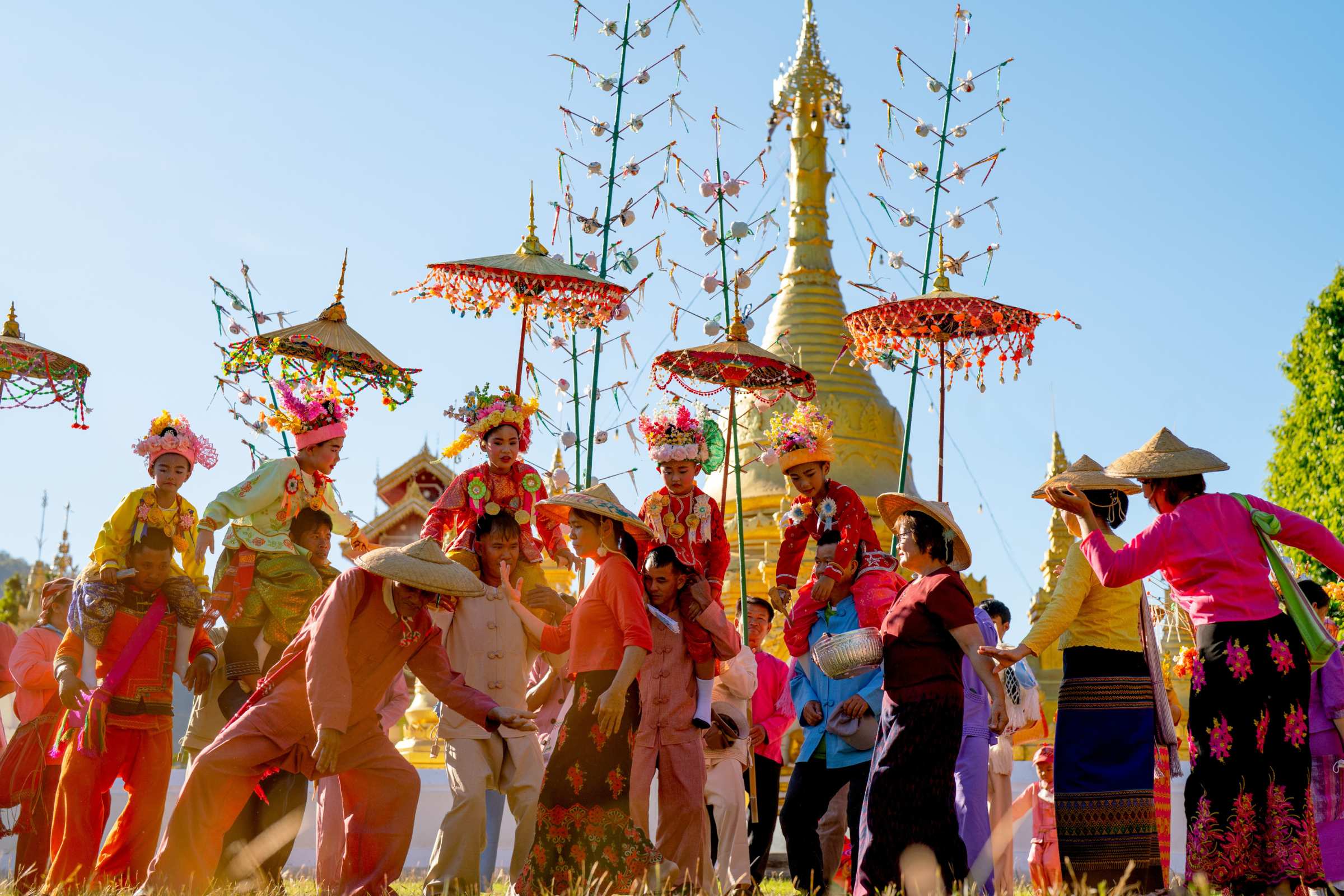
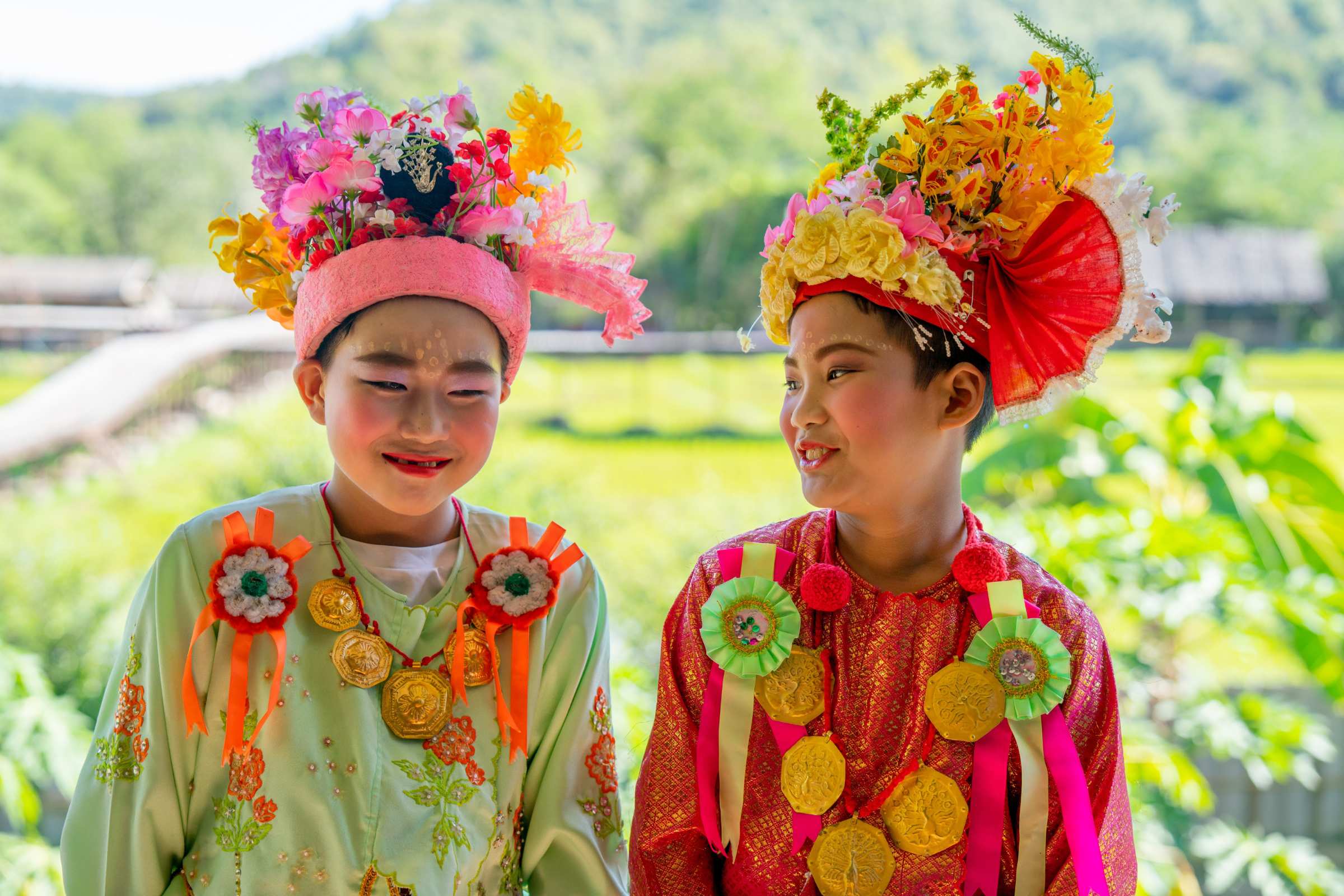
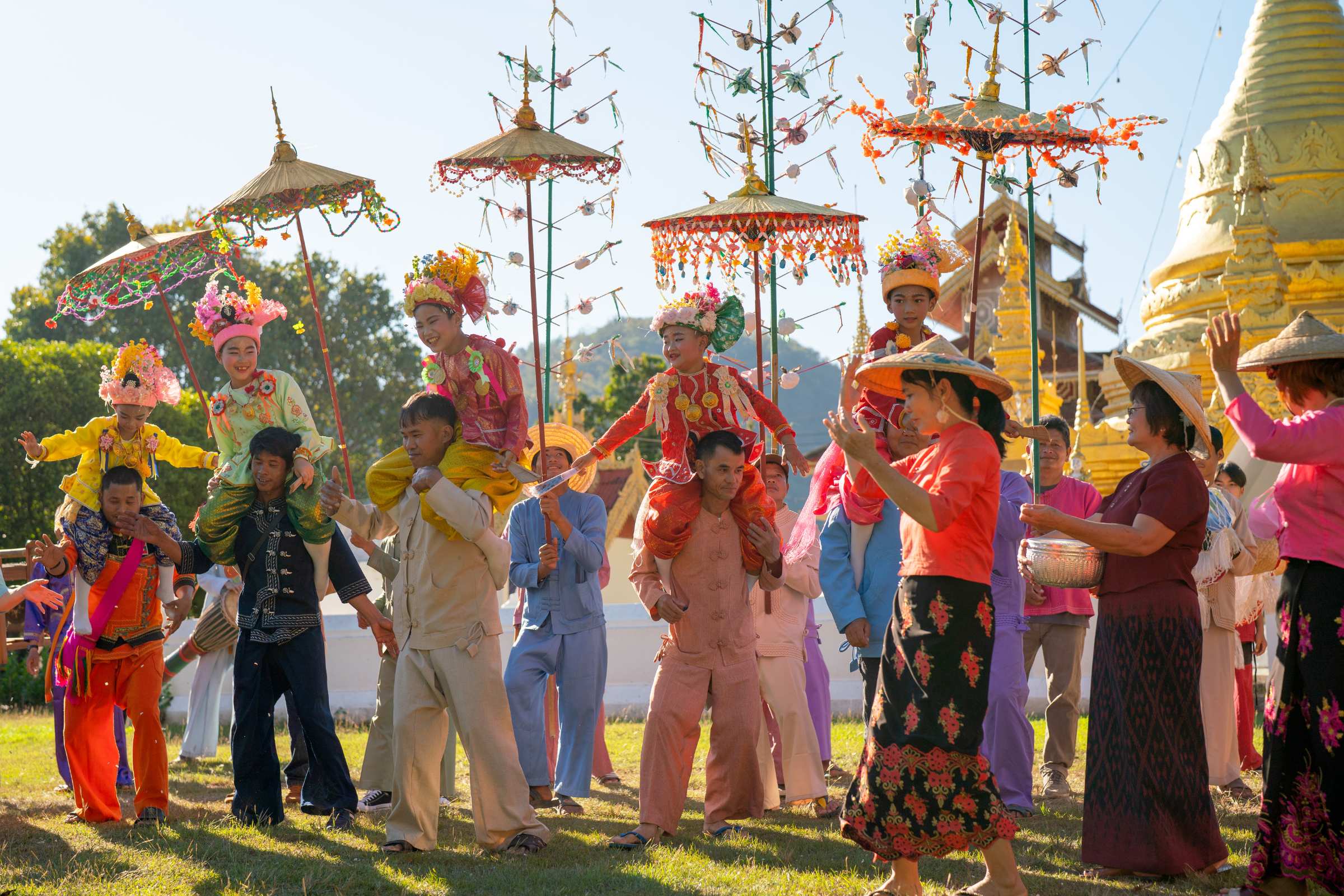
The boys are dressed in elaborate, jewel-toned costumes—layered silks, embroidered fabrics, and ornate headdresses adorned with flowers and sequins. Their faces are delicately made up, giving them an almost ethereal presence. They are carried on the shoulders of male relatives or mounted on decorated horses, as their feet are not allowed to touch the ground until the ordination.
Processions wind through temple grounds and village streets, accompanied by music, dancing, and laughter. Families and entire communities gather to celebrate, making it both a deeply personal and collective event.
Rituals and Meaning
The ceremony unfolds in three main stages:
- Preparation Day (Receive the Princes)
The boys are dressed and presented to the community, marking their transition into Sang Long. - Procession Day (Parade of Princes)
A vibrant procession filled with music and dance, where the boys are carried in a joyful public celebration. - Ordination Day (Entering Monkhood)
The boys have their heads shaved and don saffron robes, formally entering the monastic life—sometimes for a short period, sometimes longer.
This act is believed to bring great merit not only to the boys but also to their families. It is considered one of the most meaningful spiritual offerings a family can make.
Where to Experience It
In Chiang Mai, Poy Sang Long is most commonly seen in temples connected to Shan communities, particularly in districts like Mae Hong Son province (culturally linked and often included in Northern itineraries).
In Chiang Rai, the festival is also celebrated with equal vibrancy, especially in areas with strong Tai Yai (Shan) heritage. The atmosphere here can feel more intimate, with fewer crowds and a closer connection to local families.
A Living Cultural Treasure
Poy Sang Long is not staged for visitors—it remains an authentic, living tradition. To witness it is to be invited, quietly, into a moment of transformation: childhood giving way to spiritual awareness, family devotion expressed through beauty, and community bound together through ritual.
It is, in every sense, a celebration of both innocence and awakening—deeply rooted in faith, yet expressed through color, music, and joy.
