In many parts of South Asia, meaning is not always spoken—it is placed gently, by hand, at the center of the forehead.
The tilaka is one such gesture. More than a symbol, it is an act: applied during prayer, offered as a blessing, or given in welcome. It marks a moment of connection—between host and guest, devotee and deity, the inner self and the world beyond.
Traditionally positioned between the eyebrows, the tilaka aligns with the ajna chakra, often understood as the seat of awareness and intuition. But its true richness lies in its diversity. Across India and Nepal, the tilaka takes on many forms, each carrying its own quiet language.
Forms and Their Meanings
The materials themselves already suggest intention.
Sandalwood paste (chandan) cools and calms, often used in temples dedicated to serenity and devotion. Vermilion (kumkum) evokes energy and auspiciousness, frequently seen during celebrations and rites of passage. Sacred ash (vibhuti) speaks of impermanence and spiritual clarity.
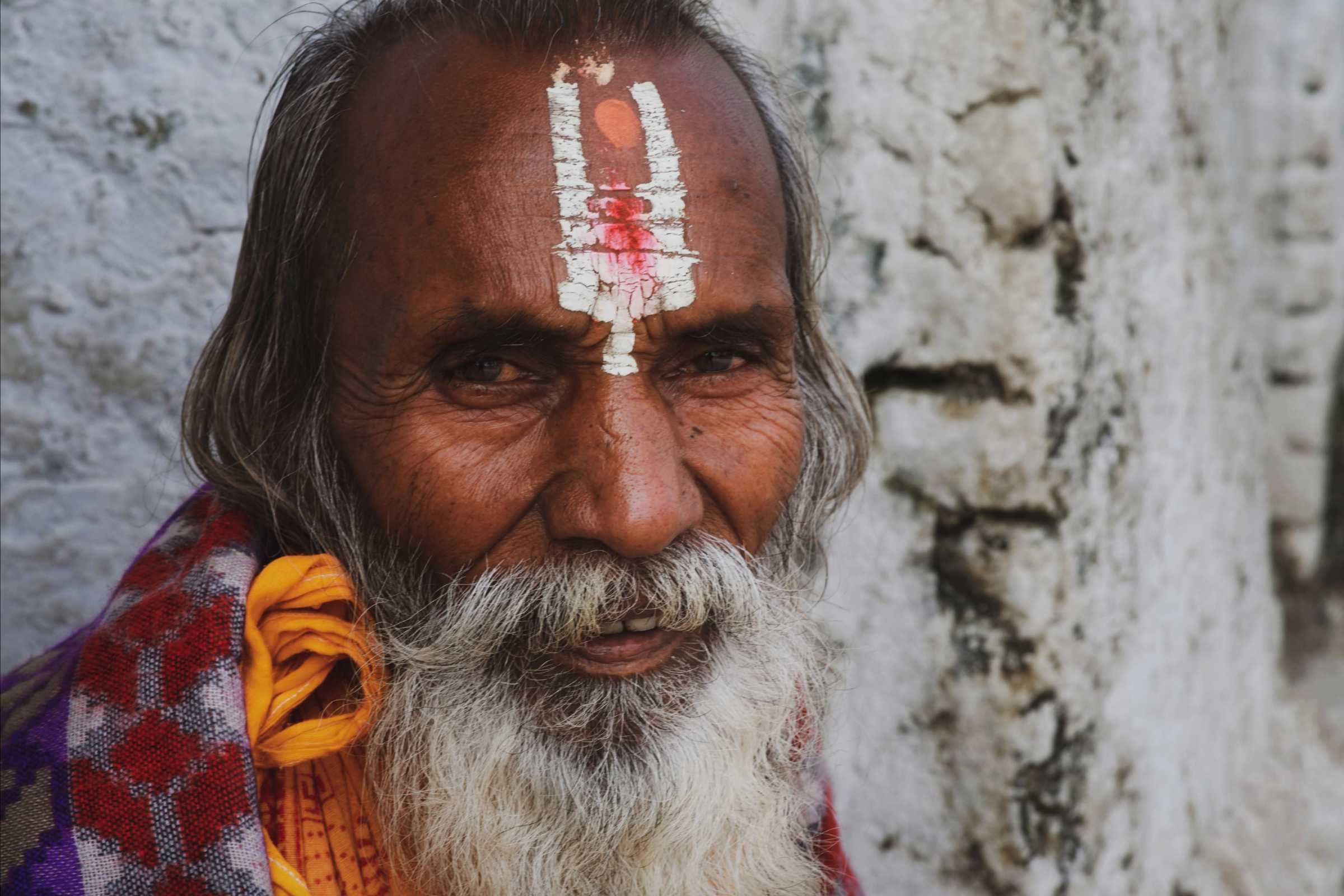
Beyond material, it is the pattern that reveals deeper meaning:
- A single vertical line (often in sandalwood or clay) is associated with Vaishnavite traditions, symbolizing devotion to Vishnu and the path of preservation and harmony.
- Three horizontal lines in ash, known as the Tripundra, are linked to Shaivite practice, representing the dissolution of ego and the transient nature of life.
- A simple red dot may be used in both ritual and daily life, invoking protection, focus, and auspicious beginnings.
- U-shaped or double vertical marks, sometimes with a central line, can signify specific sects, each variation quietly identifying lineage and philosophy.
These are not rigid codes, but living expressions. A tilaka may change with the occasion—a festival, a temple visit, a family ceremony—each time marking a different layer of meaning.
A Gesture of Welcome
What makes the tilaka especially compelling is its intimacy. It is rarely applied in isolation. More often, it is offered—by a priest at a temple threshold, by a host at the entrance of a home, by an elder at the start of a journey.
Within experiences curated by Secret Retreats, such gestures remain uncontrived and sincere. In regions like Rajasthan or along the sacred ghats of Varanasi, receiving a tilaka is not a performance, but a continuation of tradition—an unspoken welcome, a wish for well-being.
A Note on the Bindi
Closely related, yet distinct in intent, the bindi shares the same placement but has largely evolved into a form of adornment. While it may carry cultural or personal meaning, it is typically worn by choice, rather than applied as part of ritual. Where the tilaka marks a moment, the bindi often becomes part of everyday identity.