
Why the True Spirit of Asia Can Never Be Experienced from a Floating Hotel

The Water Way
There’s an old saying among sailors in the Indonesian archipelago that the land separates, but the sea connects. Anyone who has stood on the teak foredeck of a wooden boat at sunrise, watch the mist burn off the limestone peaks of the Upper Mekong, knows exactly what that means.
For the past couple of decades, commercial cruising has tried to convince travelers that bigger is better. We’ve all seen the brochures: towering ten-story liners carrying five thousand people, neon waterslides, midnight buffets, and hurried two-hour port calls where passengers are shuttled into souvenir shops before the horn blows.
It’s efficient, sure. But it isn’t travel. And it certainly isn’t Asia.
Asia’s soul doesn’t wait along industrial shipping lanes or deep-water docks. It lives tucked away in shallow mangrove estuaries, around quiet river bends where children wave from stilted wooden homes, and across hidden coral reefs that mega-liners couldn’t reach even if they tried.
If you are looking into an asian cruise tour package, the best advice any seasoned traveler can give you is simple: think smaller, slow down, and take the intimate route.
What a Real Cruise Ship Asia Tour Package Looks Like
When people hear the phrase asian cruise ship tour package, they instinctively picture a floating city. But boutique cruising flips that entire script on its head.
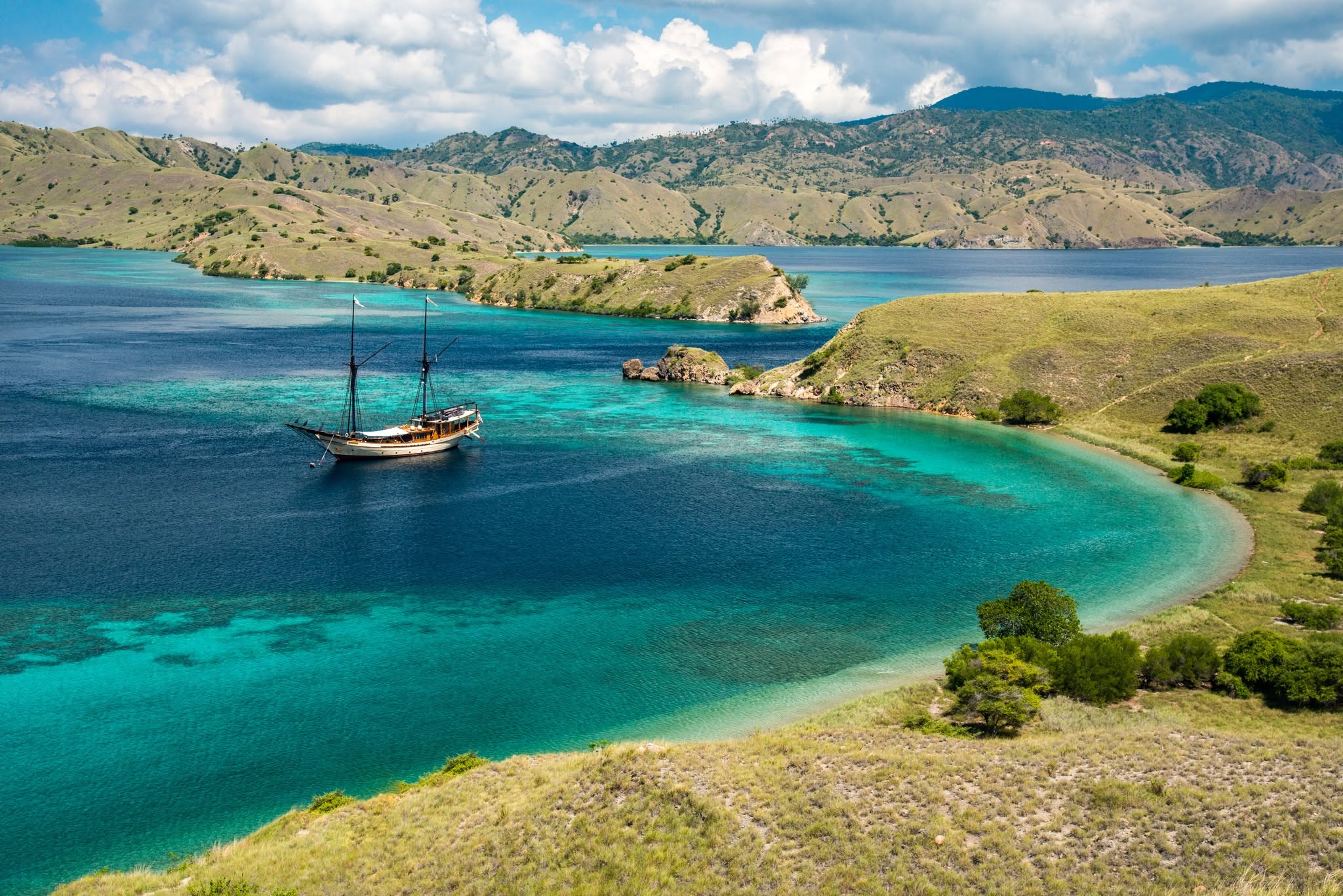
Instead of thousands of strangers, imagine a handcrafted phinisi schooner with billowing dark sails, or a low-draft heritage riverboat gliding through emerald inland channels.
When you strip away the crowds, the voyage transforms:
- Access to places off the map: A boutique vessel can slip into remote coves in Raja Ampat where manta rays breach right beside the hull. It can pull right up to a quiet bank on the sacred Ganges or Tonle Sap where no tourist bus can travel.
- The luxury of stillness: With only a handful of cabins—or chartered exclusively for your own family or circle of friends—there are no deck-chair reservations, no dinner queues, and no loudspeakers. Just the sound of water against timber and an unpolluted sky full of stars.
- Food with a sense of place: In place of banquet warmers, your chef steps ashore at morning village markets to pick up native herbs, wild greens, and line-caught fish, serving dishes rooted entirely in the culture you’re drifting through.
Three Waterways That Belong on Every Traveler’s Horizon
When choosing a cruise ship asian tour, where you go matters far less than how you move through it. Here are three journeys where traveling by water reveals a side of Asia few outsiders ever glimpse:
1. Raja Ampat & Komodo, Indonesia
Sailing through the Coral Triangle aboard a traditional ironwood yacht feels like stepping back into deep time. In Komodo, dry savannah ridges meet pink-sand coves where giant monitors wander the tide line. Farther east in Raja Ampat, you drop anchor over the most biologically diverse marine ecosystem on earth. You dive straight off the swim platform into coral gardens so dense and kaleidoscopic they almost look painted.
2. The Upper and Lower Mekong
The Mekong is the pulsing artery of Indochina. Drifting downriver through Laos toward Luang Prabang, the world slows to the pace of a Buddhist chant. Further south, where Cambodia gives way to Vietnam’s river delta, the waterway turns vibrant and busy: floating fruit markets, ancient Khmer temple complexes rising above the tree canopy, and quiet evenings spent anchored alongside palm-lined riverbanks.
3. The Backwaters of Kerala, India
India’s pace can be wonderfully intense, but its southern backwaters offer complete peace. Drifting along the palm-shaded canals of Alleppey aboard a converted kettuvallam—a traditional thatched-roof rice barge—is pure poetry. You spend your days gliding past village spice gardens, watching coir-makers weave coconut husk, and dining on fresh prawn curries served on banana leaves.
Demystifying the Asian Cruise Package Price
When travelers compare an intimate voyage against conventional luxury travel, the first question is almost always about cost: What should you expect for an asian cruise package price, and does it make sense compared to a five-star mainland hotel?
In reality, boutique cruise ship packages asia offer unmatched value when you look beneath the surface:
- A truly inclusive journey: A standard resort stay quickly racks up extras—transfers, private day-boats, national park conservation fees, dive guides, and every single meal. On a boutique cruise, nearly everything is woven in from the moment you step aboard: your dedicated private crew, specialized guides, shore expeditions, and every meal tailored to your tastes.
- Cabin versus charter flexibility: You don’t have to rent an entire vessel to experience small-ship luxury. Many boutique vessels offer intimate join-in departures starting from roughly $550 to $1,500 per cabin per night, while whole-boat private charters give families or private groups total run of the ship and complete control over the daily itinerary.
- Leaving a light footprint: Every time you choose a boutique vessel, your money stays on the water—supporting local shipwright traditions, independent boat captains, regional farmers, and marine reserve conservation initiatives.
The River and the Sea Are Waiting
You don’t truly understand a landscape until you watch it wake up from the deck of a boat. The world simply doesn’t share its quietest moments with crowds; it saves them for travelers who take the time to drop anchor, listen to the water, and drift a little deeper.
If you’re dreaming of setting sail across Asia’s most beautiful bays and hidden rivers, take a look at the handpicked journeys and private boats in the Secret Retreats Cruise Collection. Your cabin is ready whenever you are.
