
Understanding Asia: Why Do Asians Use Chopsticks?

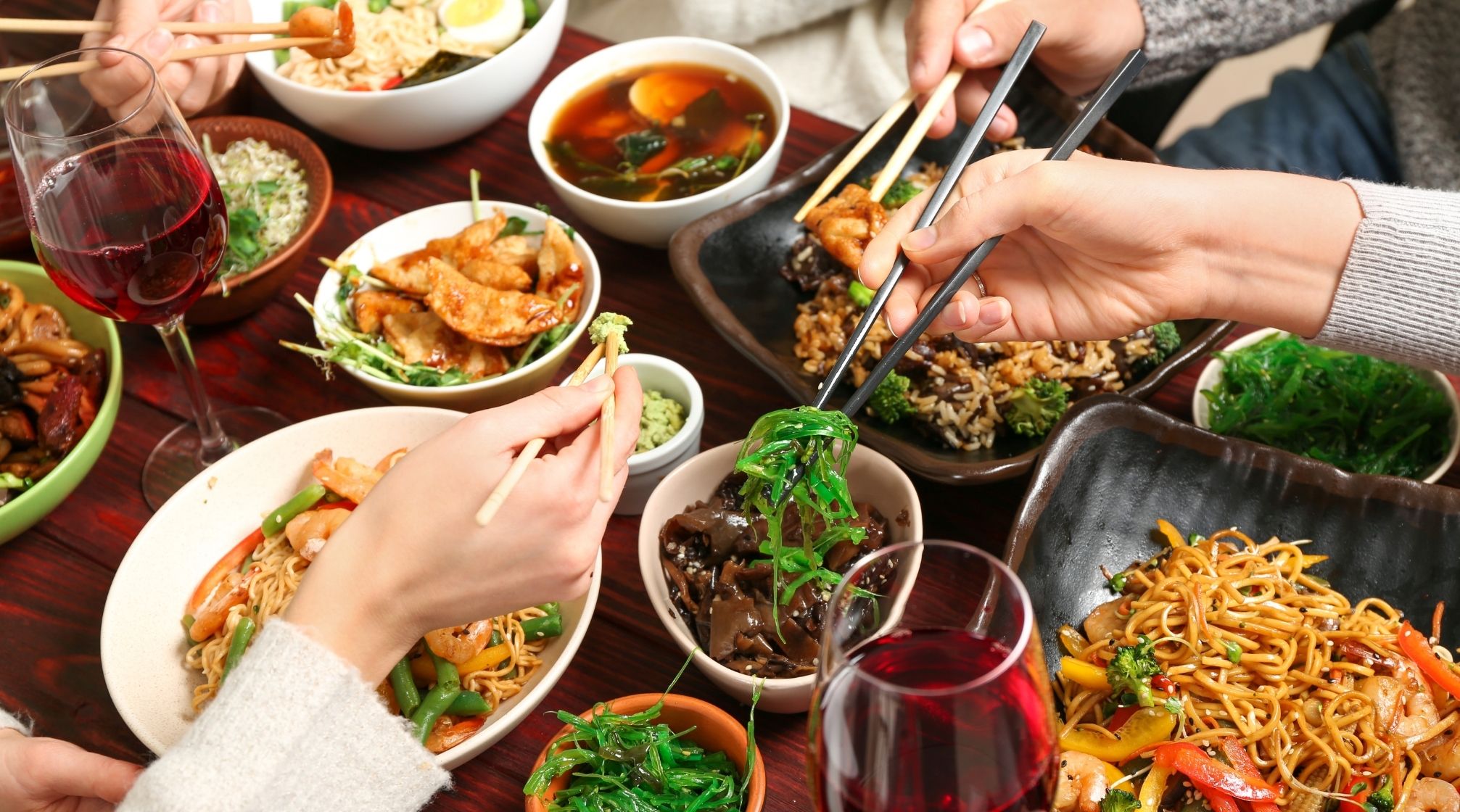
One of the first cultural experiences many travellers have when exploring Asia happens around the dining table. Whether you’re enjoying handmade dumplings in China, an elegant kaiseki dinner in Japan, a family-style feast in Vietnam, or fresh noodles at a bustling street market, you’ll likely be handed a pair of chopsticks.
For many first-time visitors, the questions come naturally. Why do Asians use chopsticks? Why is eating rice with them so difficult? And do all Asian countries eat this way?
The answers reveal far more than dining etiquette. They offer a fascinating glimpse into Asia’s history, traditions, philosophies, and the remarkable diversity that makes every destination unique. Understanding chopsticks isn’t just about learning a new skill—it’s about understanding Asia itself.
A Tradition Dating Back Thousands of Years
Chopsticks are believed to have originated in China more than 3,000 years ago during the Shang Dynasty (around 1600–1046 BCE). Early versions were likely used as cooking tools to retrieve food from boiling pots or hot oil rather than for eating.
As fuel became increasingly precious, cooks began cutting ingredients into smaller, bite-sized pieces so they would cook more quickly. Once food was already prepared in manageable portions, there was little need for knives at the dining table. Chopsticks naturally became the preferred eating utensil, while knives remained in the kitchen.
Over the centuries, the practice spread across East Asia to Korea, Japan, and later Vietnam. Each country adapted chopsticks to suit its own cuisine, customs, and dining etiquette, creating the distinctive styles used today.
Why Is Rice So Difficult to Eat with Chopsticks?
If you’ve ever struggled to pick up a bowl of rice with chopsticks, you’re certainly not alone.
The reason lies not in your technique but in the rice itself.
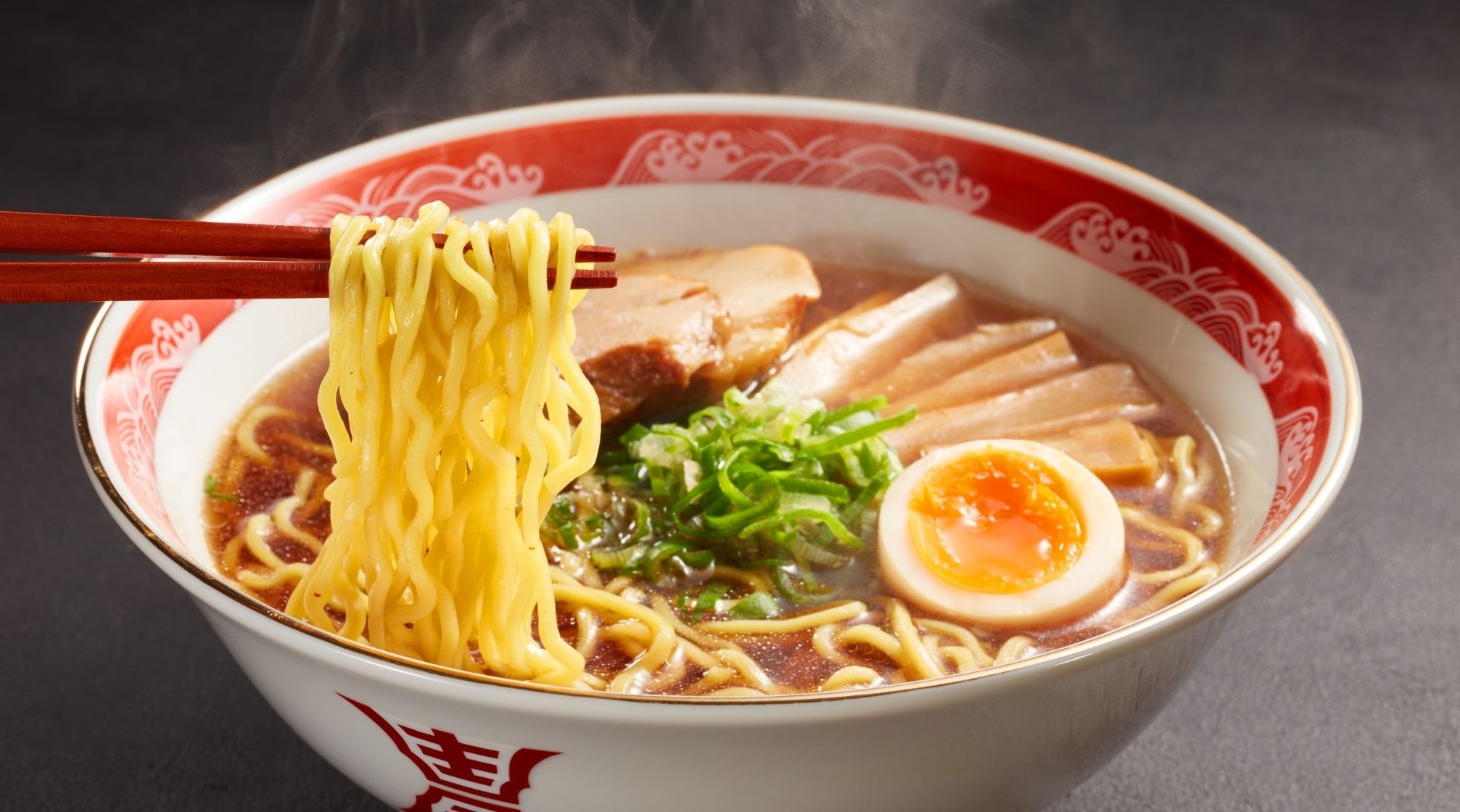
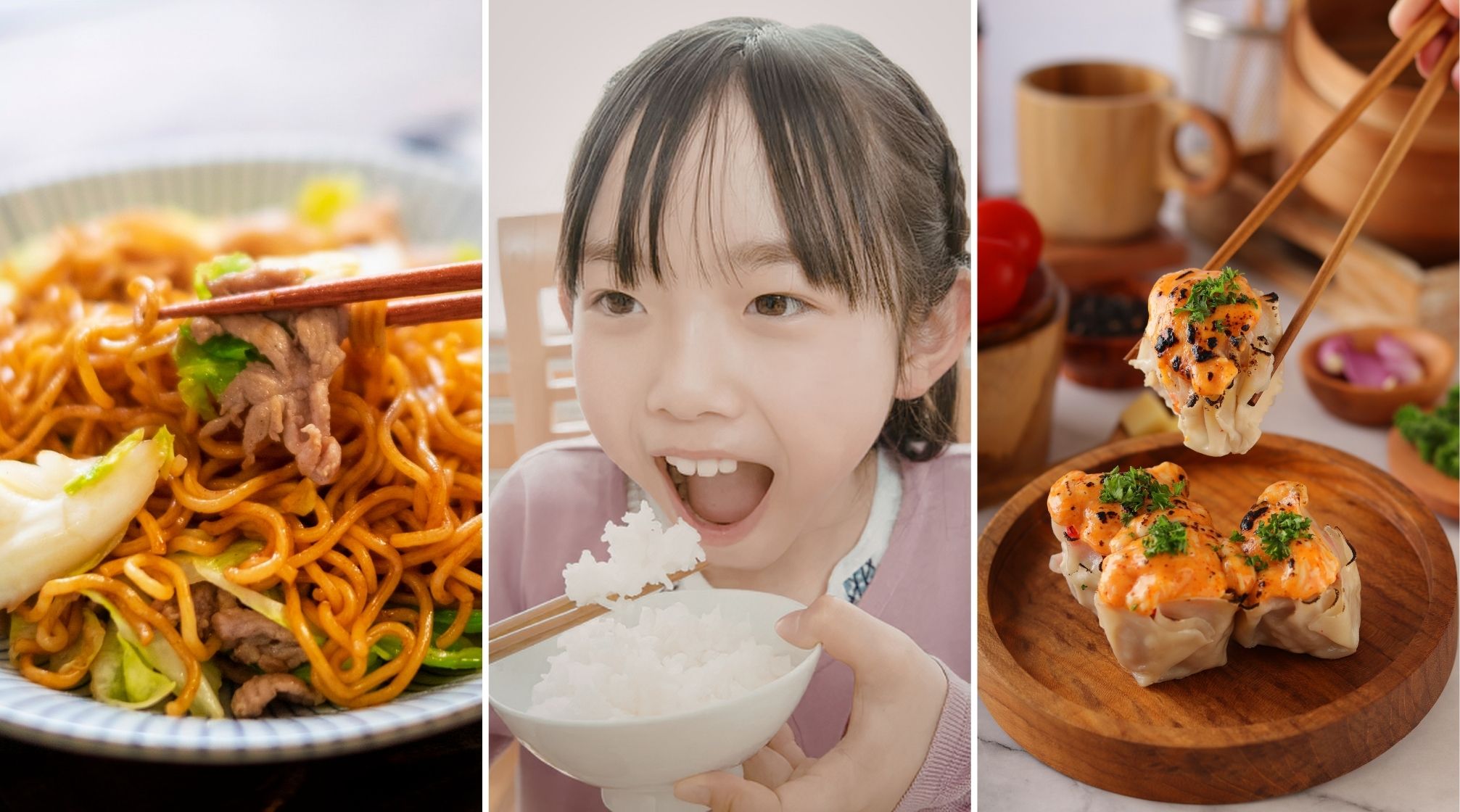
Much of the rice traditionally served in China, Japan, and Korea is short- or medium-grain rice. When cooked, it becomes slightly sticky, allowing the grains to cling together so they can easily be lifted with chopsticks.
By contrast, fragrant long-grain rice—such as Thai jasmine or Indian basmati—remains light and separate after cooking. Trying to pick up individual grains with chopsticks can feel almost impossible.
This is why dining traditions vary across Asia. In Thailand, for example, a spoon and fork are the standard utensils for most meals, while chopsticks are generally reserved for noodle dishes with Chinese origins. The utensils evolved alongside local ingredients and culinary traditions, demonstrating how food and culture have always influenced one another.
Not All of Asia Uses Chopsticks
One of the biggest misconceptions about Asian culture is that everyone eats with chopsticks.
In reality, Asia is home to an extraordinary diversity of dining traditions.
Chopsticks are the primary eating utensil in China, Japan, Korea, and Vietnam, each with its own unique etiquette and design. But travel farther across the continent, and you’ll encounter very different customs.
In Thailand, most meals are enjoyed with a spoon and fork. Across India, Sri Lanka, Nepal, and Bangladesh, eating with the right hand is a long-standing tradition, reflecting the belief that food should be appreciated through touch as well as taste. In Indonesia and Malaysia, hands and cutlery are both commonly used, depending on the region, the dish, and the occasion.
These differences are a reminder that there is no single “Asian way” of dining—just as there is no single Asian cuisine. Every destination has developed its own customs, shaped by geography, religion, history, and local ingredients.
More Than Just a Utensil
Chopsticks are far more than practical tools—they reflect values deeply rooted in many Asian cultures.
Because food is prepared before it reaches the table, there is no need for diners to use knives while eating. This tradition aligns with the teachings of Confucius, who believed that sharp implements had no place at the dining table, where meals should be occasions of peace, harmony, and togetherness.
Across much of Asia, meals are also designed to be shared. Dishes are placed at the centre of the table for everyone to enjoy, encouraging conversation, connection, and generosity. Rather than ordering individual plates, families and friends gather around a selection of dishes, creating an experience that is as much about community as it is about cuisine.
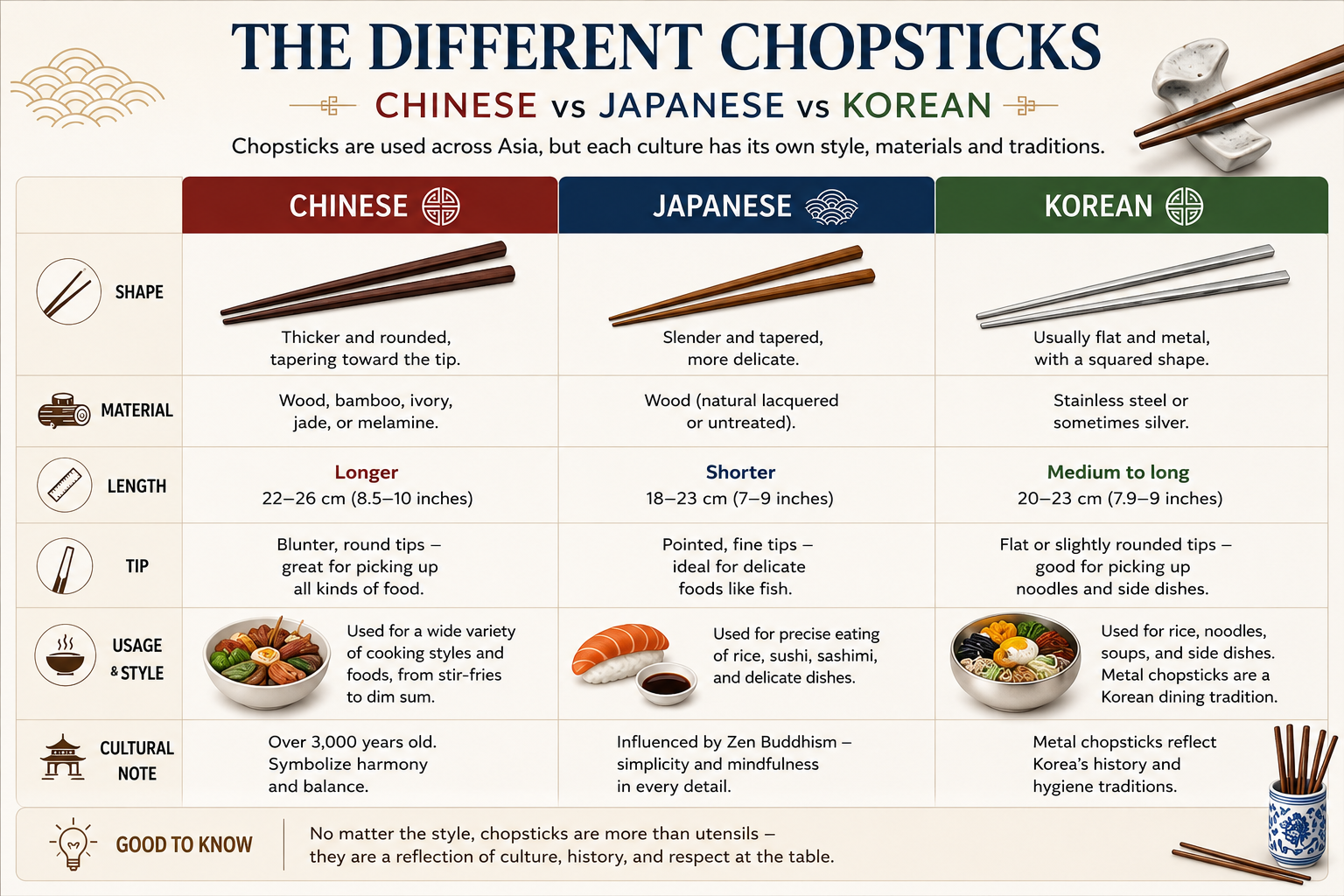
Even the chopsticks themselves tell stories. They may be crafted from bamboo, wood, lacquer, or metal, with each material reflecting local traditions and craftsmanship passed down through generations.
Chopstick Etiquette Every Traveller Should Know
Learning a few simple customs can help you dine with confidence and show respect for local traditions.
- Never leave chopsticks standing upright in a bowl of rice, as this resembles incense offered during funeral ceremonies in several East Asian cultures.
- Avoid pointing with chopsticks or using them to spear food.
- In Japan, do not pass food directly from one pair of chopsticks to another, as this recalls a funeral ritual.
- When sharing dishes, use serving chopsticks if they are provided.
These aren’t rigid rules designed to intimidate visitors. They’re small gestures of respect that demonstrate an appreciation for the culture you’re experiencing.
Discovering Asia One Meal at a Time
One of the most rewarding aspects of travelling through Asia is discovering how every meal tells a story.
At Secret Retreats, dining is never simply about exceptional food. It is an invitation to experience local traditions, family recipes, regional ingredients, and the warm hospitality that defines each destination.
